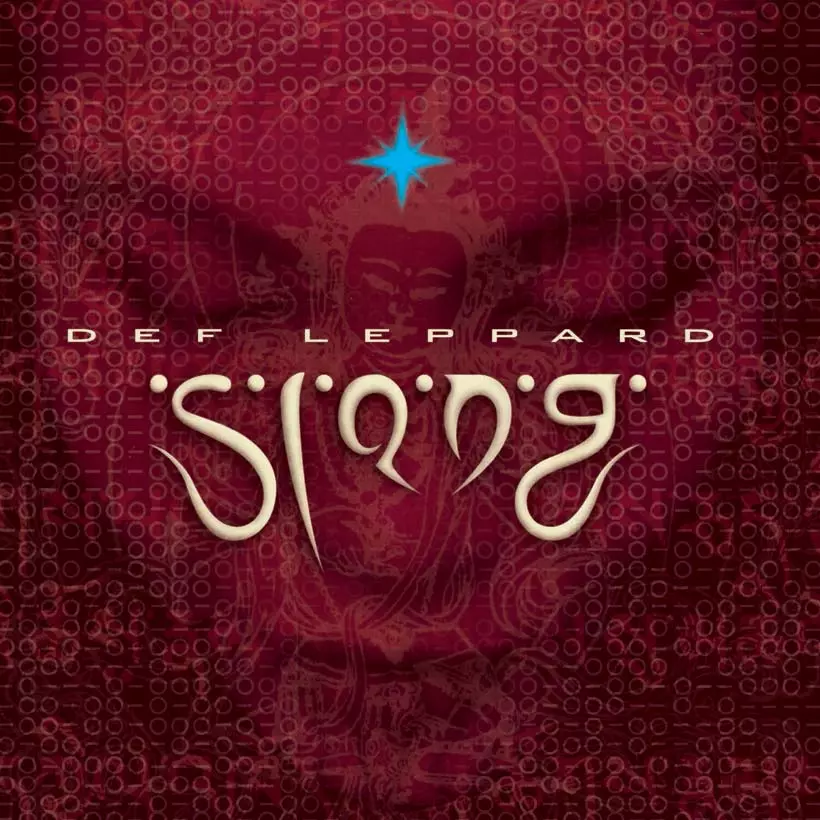
Thirty years on, Slang remains the strangest and most revealing album in Def Leppard’s catalog. Released in 1996, it arrived at a moment when the band could easily have doubled down on the immaculate architecture that had made them global giants. Instead, they stripped everything back. The gloss fell away. The seams showed. And for the first time since their earliest days, Def Leppard sounded less like a studio machine and more like the musicians who grew up on Zeppelin, Bowie, and Queen.
The mid‑90s were not kind to 80s rock titans. Grunge and alternative had redrawn the map, and the cultural mood favored rawness over perfection. It was easy, at the time, to hear Slang as Def Leppard’s answer to the mid‑90s — a band reacting to a world that had suddenly shifted under their feet. And they were reacting, in part; no artist lives in a vacuum. But the deeper truth is quieter and more internal. The band had already spoken about wanting to reconnect with their roots, to sound human again after a decade of immaculate construction. The rougher textures of the era didn’t create that impulse so much as give them permission to follow it.
And the timing mattered. By 1996, Def Leppard were no longer the invincible architects of Hysteria. They were older, shaped by grief, fatigue, the long shadow of Rick Allen’s accident, and the unresolved absence of Steve Clark. The immaculate sound that once defined them had hardened into a kind of armor. Slang was the moment they set it down.
Some artists — Bowie, Robert Plant — reinvent themselves continually, following instinct rather than legacy. Their sound changes because they change. Slang felt like Def Leppard’s brief step into that kind of evolution, a moment where their inner lives and their music aligned. But bands rarely sustain that kind of reinvention late in their careers. Reinvention is easier when you’re young, hungry, and culturally central — the way U2 were with Achtung Baby, or Radiohead with Kid A. Even Pearl Jam managed it with No Code, a pivot that split their career into a before and after. They could have lived off the sound of Ten, Vs., and Vitalogy forever, but they chose the harder path.
Def Leppard attempted something similar with Slang, but they did it later, when their identity was already cemented in the public imagination. I remember seeing them on the Slang tour. I loved the new songs — their looseness and darker edges — but I could feel the room shift when they played them. The older fans didn’t react with hostility; their response was noticeably cooler, almost muted. For a moment, I felt a flicker of sympathy for the arena demigods on stage. The power dynamic reversed. They looked exposed, almost fragile, and that muted atmosphere carried more weight than any criticism.
Euphoria arrived three years later and restored the band’s classic sheen. Understandable, perhaps inevitable — though it made the stark candor of Slang feel like a moment that passed too quickly. They never returned to that sound again, not because they couldn’t, but because the circumstances that shaped it never aligned again. Slang remains the document of a band briefly letting the mask slip.
Thirty years later, its legacy is clearer. It wasn’t their biggest album, but it may be their bravest — a rare instance where a legacy band chose honesty over certainty. In a career defined by precision and scale, Slang is the one moment where Def Leppard sounded like themselves, unguarded and uncalculated. That’s why it endures — not for its ambition, but for its honesty.