
Tag: Star Wars Farewell

  • EPISODE III — The “It’s a Wrap” Anecdote and the Day the Temple Forgot Its Priests

    Star Wars had always been a constellation of factions — the lore‑keepers, the EU readers, the model‑builders, the toy collectors, the worldbuilders, the film‑only crowd, and the quiet adults who carried the story into their real lives. For decades, the myth was big enough to hold all of them.

    I was never a lore scholar, but I knew the world well enough to feel its contours. I didn’t memorise every ship registry or planetary taxonomy, but I understood the emotional architecture — the way titles like “Mandalore” carried the weight of myth as much as history, the way the story once spoke in a register that felt tended, almost curated, the way Tolkien stewarded Middle‑earth. Not in scale — nobody equals Tolkien, not even whole teams of people — but in spirit, in the sense that the world had a tone worth protecting. What drew me in wasn’t the trivia; it was the mythic language, the sense that the galaxy had a memory older than the films themselves. That was the register I lived in.

    What changed was the sense that the new custodians, perhaps without realising it, swept many of these groups aside. Not out of malice, but out of confidence — the belief that the myth could be rebuilt without the emotional register that once held it together. The baseline shifted. The MCU had become the cultural grammar: quips, velocity, spectacle, the assumption that tone is interchangeable and myth is optional. Star Wars began to speak in that new language, and I realised, slowly and then all at once, that it was no longer speaking to me.

    The moment that crystallised it was small, almost trivial — the “It’s a Wrap” anecdote, the casual dismissal of Admiral Ackbar. A character who mattered not because of screentime but because of continuity, memory, and the quiet dignity of the old myth was waved away with a shrug. It wasn’t the loss of the character. It was the signal: the stewards no longer recognised the emotional weight certain figures carried for certain kinds of fans. The temple hadn’t burned. It hadn’t fallen. It had simply forgotten its priests.

    This wasn’t betrayal. It wasn’t outrage. It was divergence.

    They were building a galaxy for a different audience, in a different register, with different assumptions about what mattered. And that’s fair. Every myth evolves. Every generation reshapes the stories it inherits. But for the first time, I felt the story moving on without me — not rejecting me, simply no longer needing the emotional grammar I had grown up with.

    The grief was quiet. Not anger, not bitterness — just the soft ache of realising that something you loved has become something else, and that the version you carried in your bones is no longer the version being tended.

    I didn’t leave in protest or disgust. I simply recognised that the myth and I had parted ways. The galaxy was still there, bright and loud and full of motion, but it no longer spoke the language that once shaped me.

    And that’s when I understood:
    the caretakers can keep the content.
    I will keep the myth.

    The divergence wasn’t a rupture.
    It was a release.
  • EPISODE II — The Moment the Myth Broke: The Last Jedi as Personal Betrayal

    The galaxy didn’t shatter in outrage.
    It cracked in disappointment — a quiet, precise fracture, the kind you only hear if you’ve carried something for a long time.

    I grew up wanting to be cool like Han.
    But I wanted to be like Luke.

    Han was swagger.
    Luke was aspiration.
    Han was the guy you quoted.
    Luke was the man you tried to become.

    Luke was the myth and the moral grammar.
    He was the promise that goodness wasn’t naïve — it was a discipline, a choice you made again and again, even when it hurt.
    He was the axis the story orbited.
    Even in The Force Awakens, the entire narrative moved with one assumption: find Luke, and he’ll make things right.

    And then The Last Jedi arrived.

    People insisted it “challenged the myth.”
    But it didn’t.
    It inverted the myth’s moral grammar.

    The man who threw away his weapon in front of the Emperor —
    the man who believed in the sliver of light inside a monster —
    the man who refused to kill his own father —

    — was suddenly a man who ignited a lightsaber over his sleeping nephew.
    A man who ran from the world because he lost hope.
    A man who abandoned his duty because he believed he had nothing left to give.

    This wasn’t subversion.
    It was contradiction.

    It felt like losing a mentor twice:
    once in the story,
    and once in the soul.

    This was the moment the emotional contract snapped —
    the moment the myth broke.

    Not bent.
    Not challenged.
    Broken.

    Because a myth can survive reinterpretation.
    A myth can survive imperfection.
    A myth can even survive contradiction.

    But it cannot survive the inversion of its own moral grammar.

    And I want to be fair here, because fairness matters.
    The Force Awakens didn’t leave an easy path.
    It set up mysteries without answers, conflicts without foundations,
    and a galaxy that somehow reset to zero without explaining the cost.

    It handed The Last Jedi an impossible task —
    continue the myth while also inventing the scaffolding the first film skipped.

    And then The Last Jedi, in turn, left The Rise of Skywalker
    an even more impossible task:
    rebuild a myth it had just deconstructed,
    restore a character it had already inverted,
    and conclude a trilogy whose emotional grammar no longer matched itself.

    None of these films were working with a full deck.
    Each one inherited fractures from the last.

    But the injury remains.
    The ache remains.
    The sense that something essential — something moral, something mythic — slipped out of alignment.

    I don’t pretend to know the One True Version of the story.
    I only know the moment the myth broke for me,
    and the shape of the absence it left behind.

    This is the heart.
    Everything else in the cycle orbits this injury.

  • EPISODE I — The Galaxy That Was Made With Love

    The galaxy was not just imagined.
    It was crafted with devotion.

    Even the flawed prequels carried sincerity.
    The Expanded Universe was tended by writers who believed in the world they were shaping —
    from the Thrawn Trilogy naming Coruscant and expanding the myth,
    to KOTOR offering the most thoughtful meditations on the Force and the Jedi,
    to the horror novels that bent the galaxy into survival terror while still speaking the old language of shadow, corruption, and resilience.

    The grammar was mythic:

    • Heroes earned their arcs.
    • Mentors passed the legacy.
    • Lineage mattered, even when it was messy.

    You could feel the affection, even when the execution faltered.
    You could feel the devotion, even when the stories stumbled.
    The old galaxy was built by people who believed in it.
    That belief made it luminous.

    And the fans built, too.

    CGI battles rendered on home machines that groaned under the weight of their ambition.
    Stories written with reverence,
    and others that bent the myth with humour —
    because affection and irreverence were never opposites in a living world.

    Some fan works became legends in their own right.
    Troops, with its deadpan documentary grit,
    proved the galaxy was strong enough to survive parody —
    because parody made with affection is just another form of devotion.

    The Star Wars Gangsta Rap remixed the myth into rhyme,
    irreverent but never careless,
    a joke built on knowledge,
    a parody built on love.

    Even the official parodies carried that same devotion.
    Robot Chicken didn’t mock the galaxy from the outside —
    it played inside it,
    jokes that only worked because the creators knew the myth so well
    they could tilt it without shattering it.

    And not forgetting the fan remasterings, the recuts, the restorations —
    all those quiet acts of care.
    People polishing frames they didn’t own,
    cleaning audio they didn’t record,
    re‑cutting stories they had no obligation to tend.
    Not to replace the originals,
    but to keep the galaxy bright.

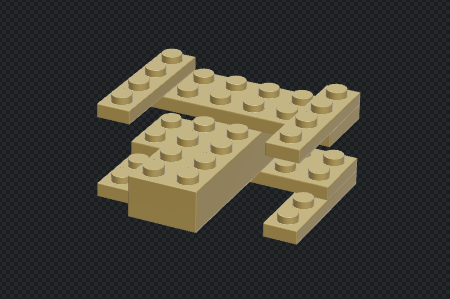
    And before the official LEGO sets existed,
    fans — children — built the galaxy from whatever bricks they had.
    Star Destroyers balanced on kitchen tables,
    X‑wings shaped from mismatched colours,
    starfighters built from whatever pieces sort of fit from different sets.

    I did that too — not masterfully,
    only with a child’s skills and a child’s resources.
    A motorcyclist minifig standing in for Luke because he had a helmet.
    A policeman pressed into service as Vader because he wore black.
    The myth filled in every gap.
    Our imaginations did the rest.

    And now my child does the same.
    I’ve never bought him any Star Wars LEGO,
    but he still built X‑Wings and Star Destroyers from assorted pieces anyway —
    the galaxy refusing to stay unmade.

    The old galaxy was luminous because it was held by many hands.
    Authors, designers, programmers, illustrators —
    and the fans who kept the constellations bright between official stars.

    Belief made it luminous.
    Shared belief made it endure.

  • EPISODE VI — I’m Ready to Let Everything Go

    Look at me — a middle‑aged man performing a Jedi‑style letting‑go ritual.

    It sounds absurd. It feels necessary.

    I loved the galaxy.  

    I loved the myth.  

    I loved the devotion.

    I don’t need the brand.  

    I don’t need the pipeline.  

    I don’t need the caretakers.

    I’m keeping the memory of the myth.


    You can love something fiercely and still set it down.  

    You can honour its language without following its stewards.  

    You can walk away with gratitude instead of anger.

    The caretakers can keep the content.  

    I’ll keep the myth.  

    And that’s enough.


    Closing Cadence

    I loved it.  

    I let it go.  

    I keep the memory.

    The galaxy has moved on.  

    So have I.  

    What remains is myth — and myth is enough.

  • EPISODE V — The Caretakers Who Don’t Speak the Old Language

    The galaxy didn’t just change hands.  

    It changed tongues.

    The old caretakers spoke myth. They built with devotion, even when they stumbled. They believed the language mattered — lineage, patience, craft.

    The new caretakers speak pipeline. They build with synergy, spectacle, brand. They believe the language is optional — that myth can be flattened into content.

    It’s turning an oracle into a hype‑man.


    The Old Language

    Even the flawed prequels carried sincerity. The Expanded Universe novels, the comics, the games — all of them were written by people who believed in the galaxy they were tending.

    The grammar was mythic:

    • Heroes earned their arcs.
    • Mentors passed the legacy.
    • Lineage mattered, even when it was messy.

    You could feel the devotion, even when the execution faltered.

    And when they diverted from myth — into horror, satire, or experiment — it was a deliberate choice, not a loss of fluency.


    The New Language

    Now the grammar is corporate:

    • Characters are assets.
    • Arcs are content beats.
    • Myth is flattened into spectacle.
    • Devotion is replaced by synergy.

    The caretakers don’t speak the old tongue.  

    They don’t even try.


    The Consequence

    A myth can survive bad stories.  

    It cannot survive caretakers who no longer speak its language.

    That’s the wound beneath the wound: not just a disappointing film, but a universe tended by stewards who don’t believe in its grammar.

    The galaxy isn’t being rewritten.  

    It’s being mistranslated.


    Closing Cadence

    The old language was devotion, patience, lineage, craft.  

    The new language is synergy, spectacle, pipeline, brand.

    One tongue builds myth.  

    The other builds content.

    And content is not enough.

  • EPISODE IV — Lightning McQueen Is a Better Luke Skywalker Than “Jake” Skywalker

    Washed up. Ready to quit. Trains an apprentice who carries his legacy. Finds a new purpose.

    Yes, I’m saying it. Yes, I’m talking about Cars 3. Yes, the movie where the protagonist is a sentient Chevy with performance anxiety.

    I only watched Cars 3 because kids. I am a Star Wars fan… or was, anyway. Bought the art books, LEGO sets, comics, computer games… The universe works in mysterious ways, and is sometimes cruel. Sometimes it’s personal. So:

    Somehow, this movie delivers the ageing‑hero arc that the most famous myth given form in cinema history absolutely fumbled.

    Let’s break this down before Disney sends a fleet of lawyers riding speeder bikes (because FUCK ski speeders).

    Lightning McQueen: The Washed‑Up Legend Who Actually Shows Up

    Lightning starts Cars 3 in full midlife‑crisis mode. He’s getting smoked by a car that looks like a high‑end gaming mouse on wheels. His friends are retiring. His sponsors are eyeing younger models. He’s one bad race away from becoming a cautionary tale on ESPN8: The Ocho.

    And what does he do?

    • He reflects.
    • He trains.
    • He eats humble pie like dessert.
    • He mentors Cruz because he sees her potential, not because the plot needs a checkbox ticked.

    Lightning doesn’t run away to an island. Lightning doesn’t ghost the entire sport. Lightning doesn’t drink neon‑green milk straight from a space cow’s teat.

    Lightning does the work.

    Cruz Ramirez: The Apprentice Who Actually Has an Arc

    Cruz is everything a well‑written next‑gen hero should be (whether she is fully realised or not is beside the point):

    • Underdog
    • Insecure
    • Talented but untested
    • Held back by the world, not elevated by destiny
    • Forced to train, fail, and try again

    Her growth is earned. Her victory is earned. Her legacy is earned.

    She doesn’t get powers because the universe thinks she’s quirky. She gets good because she works.

    Imagine that.

    Strong new heroes aren’t the problem — poorly written arcs are.

    Meanwhile, in a familiar galaxy far, far away…

    Luke Skywalker becomes “Jake” Skywalker the moment he decides the best way to handle trauma is to become a Force‑powered Airbnb host who hates guests.

    He doesn’t mentor Rey. He doesn’t guide Rey. He doesn’t even like Rey.

    Their dynamic is basically:

    • Rey: “Teach me.”
    • Luke: “No.”
    • Rey: “What if I stare at you?”
    • Luke: “Still no.”
    • Movie: “Anyway, she’s a Jedi now.”

    Rey, for her part, is written like the universe’s favourite child:

    • Already powerful
    • Already special
    • Already mythic
    • Already good at everything except waiting her turn

    There’s no lineage. There’s no craft. There’s no emotional baton pass. Just Girl Power™ without the character growth.

    The Torch‑Passing Moment

    Lightning’s handoff to Cruz is clean, earned, and kind of moving. He steps aside because he chooses to — not because the plot shoves him off a cliff.

    Luke’s handoff to Rey is… what, exactly?

    A Force Skype session and a guilt‑trip cameo.

    Lightning becomes a mentor. Luke becomes a hologram.

    Cruz becomes a racer. Rey becomes a symbol.

    One pair feels like a lineage. The other feels like a reboot.

    Lightning completes the Return — and brings the elixir back with him. Luke never does.
    One story believes the hero’s final duty is to teach; the other believes it’s to disappear.

    The Irreverent Thesis, Now Fully Justified

    Cars 3 — the movie about sentient automobiles — delivers a more coherent, emotionally satisfying, mentor’s hero’s journey than the sequel trilogy that inherited the most famous myth given form in cinema history.

    Lightning grows. Cruz grows. The legacy grows.

    “Jake” sulks. Rey ascends. The legacy… what legacy.